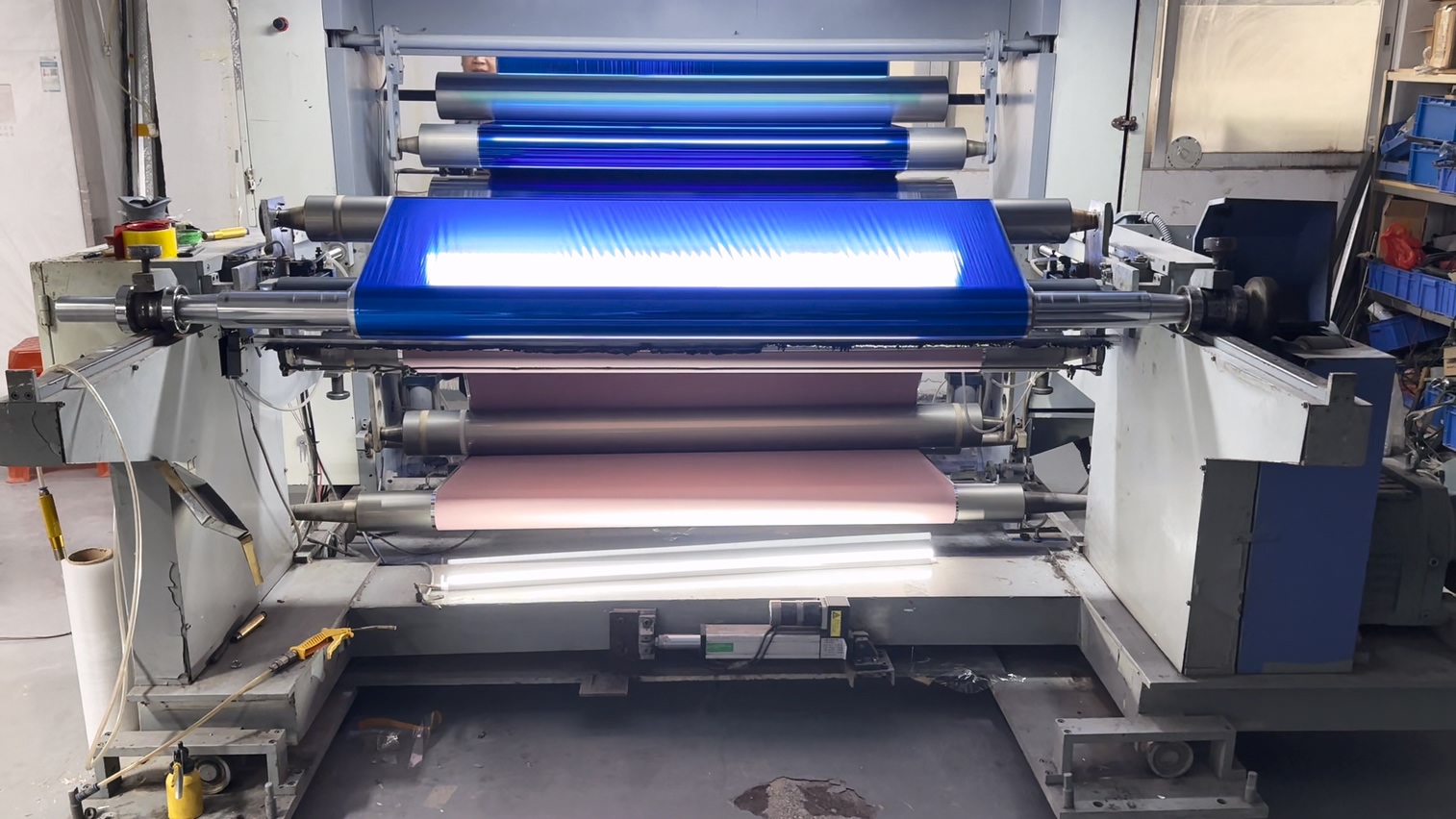
Eco-friendly hot stamping
Jinhui Pioneers Green Revolution in Printing with Eco-Conscious Low-Temperature Bronzing Paper
As global regulators tighten carbon emission mandates—EU’s Carbon Border Adjustment Mechanism (CBAM) now penalizes high-pollution imports—the printing industry faces unprecedented pressure to decarbonize. Traditional hot stamping, a cornerstone of luxury packaging, remains notoriously energy-intensive, consuming 3.8 kWh per 1,000 sheets at 180–220°C operating temperatures. Jinhui’s newly launched EcoFoil™ LT Series disrupts this paradigm, merging cutting-edge material science with circular design to redefine sustainable metallization.
The Carbon Cost of Conventional Metallization: An Industry Crisis
A 2023 Smithers report warns that the global hot foil stamping market emits 12.7 million metric tons of CO2 annually, with 65% attributed to energy-intensive heating and solvent-based adhesives. For SMEs, compliance costs could erode 8–15% of margins by 2025 under EU taxonomy rules. Simultaneously, brands like LVMH and Estée Lauder now mandate that 100% of packaging partners adopt ISO 14067-certified low-carbon processes by 2026.
Jinhui’s EcoFoil™ LT directly tackles these dual challenges. Its patented Low-Temperature Activation System (LTAS) operates at 90–130°C—30–40% cooler than conventional setups—slashing energy consumption to 1.2 kWh per 1,000 sheets. By replacing petroleum-derived adhesives with a bio-based hydrogel matrix, the process cuts VOC emissions by 92% while enabling compatibility with heat-sensitive substrates like recycled PET, PLA bioplastics, and even edible rice paper for confectionery packaging.
Nano-Engineering Meets Circular Design
At the core of EcoFoil™ LT lies a 10μm ultra-thin polyester film reinforced with graphene oxide strands, achieving tensile strength comparable to 25μm industrial-grade foils. This nano-engineered base allows precise heat transfer for 0.3mm micro-text patterns—critical for anti-counterfeit luxury labels—while reducing raw material use by 60%.
The foil’s AquaBond™ water-based coating is a breakthrough in green chemistry:
-
Zero Solvent Residues: Passes FDA 21 CFR §175.300 for direct food contact, enabling use on chocolate wrappers and tea bags;
-
Self-Healing Adhesion: Microcapsules release repair agents when detecting delamination, extending product lifespan by 3×;
-
Closed-Loop Recovery: Post-production scraps and used foils are 95% recyclable via Jinhui’s “ReFoil” program, where waste is processed into new rolls at partnered facilities.
Independent tests by SGS confirm EcoFoil™ LT achieves a 98.5 CIE Whiteness Index and 89° gloss units, outperforming solvent-based competitors. A Swiss chocolatier reported zero packaging rejections due to foil delamination or odor contamination after switching to EcoFoil™ for its praline boxes.
From Luxury to Everyday: Expanding Applications
While initially targeting high-end cosmetics (e.g., rigid boxes for perfumes), EcoFoil™ LT’s versatility has unlocked novel markets:
-
Food Safety: A Japanese mochi brand uses edible-grade metallic accents, replacing plastic glitter with FDA-compliant rose gold foils;
-
Durable Goods: German automaker BMW trials EcoFoil™ on vegan leather dashboards, withstanding 100,000+ abrasion cycles in -40°C to 85°C tests;
-
E-Commerce: Alibaba’s Tmall Luxury Pavilion requires branded shipping boxes to use certified low-carbon foils by 2024—a $220M opportunity for Jinhui’s partners.
Economic Calculus: Cutting Costs While Saving the Planet
Early adopters quantify tangible ROI:
-
Energy Savings: A Shenzhen packaging converter reduced monthly electricity bills from ¥78,000 to ¥24,000 after retrofitting 10 stamping presses with EcoFoil™ LT;
-
Waste Reduction: A Milanese stationery producer lowered foil scrap rates from 18% to 2%, saving €360,000 annually;
-
Market Premiums: Brands using EcoFoil™ LT report 15–20% price premiums for “Carbon-Neutral Certified” packaging lines.
Jinhui further incentivizes adoption through its Green Transition Subsidy Program, offering 10% rebates to SMEs that replace two-thirds of traditional foils with EcoFoil™ LT within 18 months.
Roadmap to 2030: Bio-Intelligent Metallization
Jinhui’s R&D pipeline signals ambitious next steps:
-
Algae-Derived Pigments: Partnering with UC San Diego to develop carbon-negative foils using genetically modified diatoms;
-
Blockchain Traceability: QR-enabled foils allowing consumers to scan and verify carbon footprint data (pilot with L’Oréal Q1 2025);
-
Self-Degrading Films: Enzymatic coatings that dissolve in industrial composters within 72 hours, targeting 100% biodegradability by 2027.
“Sustainability isn’t a buzzword—it’s survival,” asserts Dr. Helena Wu, Jinhui’s Chief Sustainability Officer. “EcoFoil™ LT proves ecology and economics can coexist. Our goal? Make every foil sheet a net-positive contributor to the planet.”
Industry Reactions & Strategic Alliances
The World Packaging Organization (WPO) has endorsed EcoFoil™ LT as a “Best Practice” for decarbonization, while DHL’s GoGreen program offers 5% logistics discounts to clients using Jinhui-certified packaging. With 37 patents filed and partnerships spanning BASF to Terracycle, Jinhui positions itself not just as a supplier, but as an architect of the circular economy.
For converters, brands, and regulators alike, EcoFoil™ LT represents more than innovation—it’s a lifeline in the race toward net-zero. As the IPCC’s 2030 deadline looms, Jinhui’s vision redefines luxury: shimmering finishes that honor both craftsmanship and climate.
Innovative solutions to solve the pain points of hot stamping